

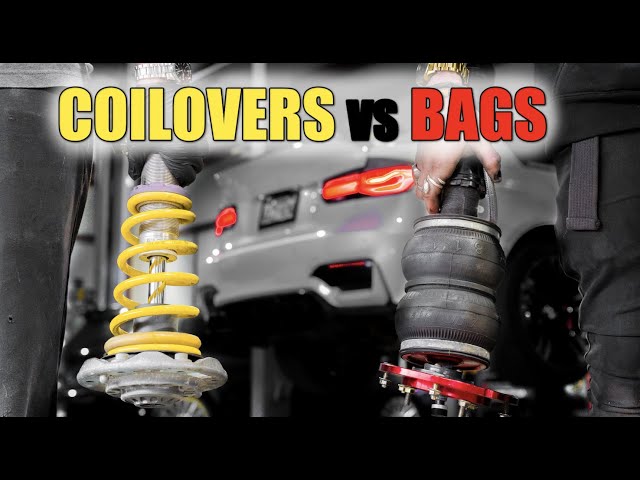
Coil-Overs vs Air Ride: The Ultimate Guide to Choosing Your Suspension
Introduction: The Foundation of Your Build’s Personality
The suspension system is the soul of your vehicle. It dictates how it handles a corner, absorbs a bump, and even how it sits at a show. For builders upgrading from stock, the two most popular modern choices are coil-over suspensions and air ride systems. This isn’t just a choice of parts; it’s a decision that defines your car’s character and capability.
The “right” answer depends entirely on your goals. Are you building a corner-carving pro-touring machine or a laid-back lowrider that scrapes the pavement? This guide will break down the pros, cons, costs, and ideal applications for both coil-overs and air ride to help you make the perfect choice for your project.
Part 1: Coil-Over Suspension – The Performance Purist’s Choice
Coil-overs integrate a coil spring and a shock absorber into a single, compact unit. They are typically height-adjustable via a threaded spring perch, allowing you to fine-tune your ride height.
Key Advantages of Coil-Overs:
-
Superior Handling & Performance: The primary benefit. Coil-overs are engineered for optimal spring rates and damping, providing exceptional responsiveness, reduced body roll, and predictable cornering.
-
Consistent Ride Height: Once set, your ride height remains constant, ensuring consistent handling characteristics.
-
Simplicity & Reliability: Fewer components than a full air ride system mean fewer potential points of failure. It’s a straightforward, mechanical system.
-
Lighter Weight: Generally lighter than a comparable air ride setup, which benefits overall performance.
Potential Drawbacks of Coil-Overs:
-
Fixed Ride Height: You cannot adjust the ride height on the fly. If you set it low, you must drive it low, being cautious over speed bumps and driveways.
-
Firmer Ride Quality: Performance-oriented spring rates can result in a firmer ride compared to stock or well-tuned air ride.
-
Limited “Show” Factor: While they can achieve a aggressive stance, they lack the dramatic lift-and-lay capability of air suspension.
Ready to choose your coil-overs? Explore our range of Viking Performance Double-Adjustable Coil-Overs to fine-tune your compression and rebound.
Part 2: Air Ride Suspension – The Versatile Showstopper
Air ride replaces traditional springs with air bags. By adjusting the air pressure in each bag, you can raise or lower the vehicle electronically.
Key Advantages of Air Ride:
-
Adjustable Ride Height On-Demand: This is the killer feature. Crank it up for driving and slam it to the ground for shows. It offers unparalleled versatility.
-
Superior Ride Comfort: At cruising pressure, air bags can provide a remarkably smooth and comfortable ride, often better than stock.
-
Customizable Stance: Achieve a perfectly level stance or even “rake” the car (lower in the front, higher in the back) with precision.
-
The “Wow” Factor: The ability to lay frame is a central part of lowrider and custom car culture.
Potential Drawbacks of Air Ride:
-
Higher Complexity & Cost: Requires an air compressor, valves, air tanks, lines, and a management system. More components mean a higher initial cost and more potential maintenance.
-
Reduced Ultimate Performance: While modern systems like RideTech’s Level 2 are very capable, air bags cannot match the instantaneous response and feedback of a high-end coil-over on a track.
-
Potential for Leaks: Air systems are susceptible to leaks over time, which can leave you stranded if not maintained.
For a complete air ride setup, pair your system with a strong foundation like a Scott’s Hot Rods 4-Bar Rear Kit M-42-14-PT.
Head-to-Head Comparison Table
| Feature | Coil-Over Suspension | Air Ride Suspension |
|---|---|---|
| Primary Goal | Maximize Handling & Performance | Adjustable Ride Height & Comfort |
| Ride Quality | Firm, Sporty, Controlled | Plush, Comfortable, Adjustable |
| Ride Height Adjustability | Manual, Fixed | On-the-Fly, Electronic |
| Complexity | Low | High |
| Initial Cost | Moderate to High | High to Very High |
| Maintenance | Low (Standard shock service) | Moderate (Check for leaks, compressor function) |
| Ideal For | Pro-Touring, Track Cars, Performance Street | Customs, Lowriders, Restomods, Daily Drivers |
Part 3: How to Choose: Answer These Key Questions
Still unsure? Your answers to these questions will point you in the right direction.
1. What is the PRIMARY purpose of your vehicle?
-
A.) Aggressive street driving, canyon carving, or track days. -> COIL-OVERS
-
B.) Cruising, showing, and achieving a specific stance. -> AIR RIDE
2. What’s your budget for the suspension alone?
-
A.) $1,500 – $3,000 -> COIL-OVERS (You can get a very good set)
-
B.) $3,000 – $6,000+ -> AIR RIDE (A quality complete kit is an investment)
3. How important is a “plush” ride quality to you?
-
A.) I prefer a connected, sporty feel, even if it’s firmer. -> COIL-OVERS
-
B.) I want the smoothest ride possible for long trips. -> AIR RIDE
4. Do you need to change ride height frequently?
-
A.) No, I’ll set it and forget it. -> COIL-OVERS
-
B.) Yes, I need to clear obstacles and lay out at shows. -> AIR RIDE
🛠️ Suspension Deep Dive: Related Articles
Conclusion: It’s About Your Vision
There is no universal “best” suspension—only the best suspension for your car.
-
Choose Coil-Overs if your priority is razor-sharp handling, track performance, and a simple, reliable system. It’s the choice for the driver.
-
Choose Air Ride if your vision includes adjustable stance, a cloud-like ride, and the dramatic ability to lay your frame on the ground. It’s the choice for the showman and cruiser.
Many builders even opt for a hybrid approach, like coil-overs in the front for precise steering response and a simple air bag setup in the rear for load leveling when towing. Understand your goals, be honest about your budget, and you’ll select the system that brings your vision to life.
For advanced technical reading on suspension kinematics and design theory, the Society of Automotive Engineers (SAE) International is an excellent resource for white papers and standards.