

What’s the Best Suspension System Setup for Your Vehicle? (Spoiler: It Depends)
(Meta Title:
Meta Description: There’s no single “best” suspension. Our guide helps you choose the perfect setup for your daily driver, off-roader, track car, or classic cruiser.
Focus Keyword: )**
Introduction: The Myth of a “One-Size-Fits-All” Suspension
Ask ten gearheads what the “best” suspension is, and you’ll get eleven different answers. That’s because the perfect suspension setup is not a specific brand or type—it’s the system that is optimized for your vehicle’s intended purpose.
A suspension that makes a rock crawler unstoppable off-road would be terrifying on a racetrack. The plush ride of a luxury sedan would be a disaster in a lowered street rod. The best suspension is the one that aligns perfectly with your goals. This guide will help you define those goals and match them to the ideal setup.
Step 1: Define Your Vehicle’s Primary Mission
The first and most critical question you must answer is: What do I primarily use this vehicle for? Be honest. Your answer will dictate everything that follows.
-
A.) Daily Driver / Family Hauler: Comfort, reliability, and predictable handling in all weather conditions are key.
-
B.) Off-Road / Overlanding: Maximum traction, wheel articulation, and durability over rough terrain are the priorities.
-
C.) Performance / Track Car: Cornering grip, minimal body roll, and precise feedback are non-negotiable.
-
D.) Classic Car / Street Rod: A blend of improved handling over stock, a comfortable ride, and the perfect stance.
Step 2: Match Your Mission to the Ideal Suspension Type
Based on your answer above, here are the recommended paths.
A. For the Daily Driver: Prioritizing Comfort & Reliability
Your Goal: A smooth, quiet ride that can handle potholes and highway miles with confidence.
-
Recommended Setup: Quality OEM Replacement or Mild Upgrade.
-
Why it Works: Modern OEM suspensions are finely tuned for a balance of comfort and safety. If you’re just refreshing a worn-out system, high-quality OEM-style struts and springs are often the best choice. For a slight improvement in handling without sacrificing comfort, consider a “OE Plus” package from brands like KYB or Bilstein’s B6 series.
-
What to Avoid: Overly stiff lowering springs, aggressive coil-overs, or any system that compromises ride quality for looks.
-
Key Components: OEM-style strut/spring assemblies, gas-charged shocks.
Internal Link: For a deep dive on comfortable performance, read our guide Coil-Overs vs. Air Ride: Choosing Your Suspension.
B. For the Off-Roader: Conquering the Trail
Your Goal: Increased ground clearance, traction over obstacles, and controlling unsprung weight.
-
Recommended Setup: Lifted Suspension with Long-Travel Shocks.
-
Why it Works: A lift kit (via taller springs or spacers) provides clearance for larger tires. Long-travel shocks allow the wheels to move up and down (articulate) further, keeping them in contact with the ground for better traction. Adjustable external reservoir shocks help manage heat on long, rough trails.
-
What to Avoid: Lowering kits, street-oriented sway bars that limit articulation, and weak stock components.
-
Key Components: Lift kit (springs/spacers), performance off-road shocks (e.g., Fox, King), heavy-duty control arms.
C. For the Performance Enthusiast: Mastering the Pavement
Your Goal: Lap times, razor-sharp turn-in, and a flat cornering attitude.
-
Recommended Setup: Fully Adjustable Coil-Over System.
-
Why it Works: Coil-overs allow you to precisely set ride height, corner weight, and damping (rebound/compression). This level of adjustability is essential for fine-tuning handling balance. Pair them with stiffer sway bars to minimize body roll.
-
What to Avoid: Air ride for pure track use (due to heat and consistency issues), any non-adjustable system.
-
Key Components: 2-way or 3-way adjustable coil-overs (e.g., Viking Performance), performance sway bars, camber plates.
The foundation of a great handling car is a solid rear end. Learn about Scott’s Hot Rods 4-Bar Rear Kits for classic builds.
D. For the Classic Car / Street Rod: The Perfect Blend
Your Goal: Modern driving dynamics with classic style, and the ability to achieve a killer stance.
-
Recommended Setup: Modernized Chassis with Coil-Overs or Air Ride.
-
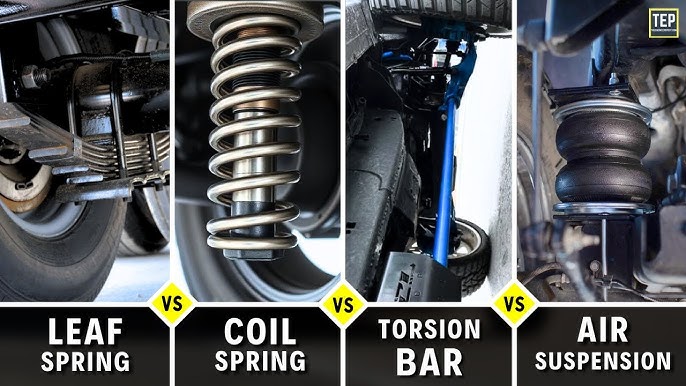
Why it Works: Replacing outdated leaf springs or torsion bars with a modern independent front suspension (IFS) or a four-link rear (like a Scott’s Hot Rods kit) is transformative.
-
Choose Coil-Overs if you want the best handling for spirited driving.
-
Choose Air Ride if adjustability and a silky ride are your top priorities, and you want the “lay frame” look.
-
-
What to Avoid: Trying to make 50-year-old stock geometry handle like a modern car.
-
Key Components: IFS kit, 4-bar or triangulated 4-link rear, coil-overs or air bags.
The “It Depends” Factor: Key Considerations
Even within your category, you need to think about:
-
Budget: A full IFS kit for a classic car can cost $5,000+, while refreshing a daily driver’s struts might be $1,000.
-
DIY Skill Level: Installing bolt-on shocks is one thing; cutting out a stock front clip to install an IFS is another. Be realistic.
-
Local Laws: Some areas have strict regulations about lift heights and frame modifications.
-
The Rest of the Car: A great suspension is wasted on worn-out bushings, bad ball joints, and floppy chassis rails. Address the entire system.
🛠️ Suspension Component Deep Dives
Conclusion: The Best Suspension is the One You’ve Tailored
So, what’s the best suspension system? It’s the one that transforms your vehicle into the best version of itself for how you actually use it.
-
Daily Driver? Don’t overthink it—prioritize comfort and reliability.
-
Off-Roader? Focus on durability, travel, and traction.
-
Track Warrior? Invest in adjustability and precision.
-
Street Rodder? Modernize the chassis for style and driveability.
The best upgrade you can make is to clearly define your goals and then build or buy a suspension system that is purpose-built to achieve them. There is no single “best” answer, but there is a perfect answer for you.
External Link: For highly technical discussions on vehicle dynamics and suspension theory, the Society of Automotive Engineers (SAE) International is an invaluable resource for engineers and serious enthusiasts.